
Ramps, accessible bathrooms, and vehicle changes after a severe Missouri work injury: when workers’ comp may pay.
After a spinal cord injury, an amputation, a brain injury, or a failed fusion, home can become the hardest place to be. Steps you once took without thinking now block the front door. A bathtub becomes a fall risk. Many St. Louis families end up paying out of pocket for a ramp or a bathroom remodel.
Facing home changes after a serious work injury? Talk directly with Attorney James M. Hoffmann. Free consultation: (314) 361-4300.
What Missouri Law Says
Section 287.140.1 requires the employer to provide “medical, surgical, chiropractic, and hospital treatment, including nursing, custodial, ambulance and medicines, as may reasonably be required after the injury or disability, to cure and relieve from the effects of the injury.”
The words “home modification” do not appear in the statute. The question is whether a change is reasonably required to cure and relieve the effects of the injury. Section 287.140.8 also allows the Division or Commission to order artificial limbs, joints and braces “as needed, for life.”
Missouri courts have applied that test to a vehicle. In Mickey v. City Wide Maintenance (1999), the Court of Appeals held that modifications to a van to load and unload a wheelchair can be medical treatment, where the evidence showed a present medical need for a wheelchair lift. The court limited its ruling to those facts and sent the cost of the van itself back to be sorted out separately.
Modifications That Often Come Up
Depending on the injury, the changes at issue may include:
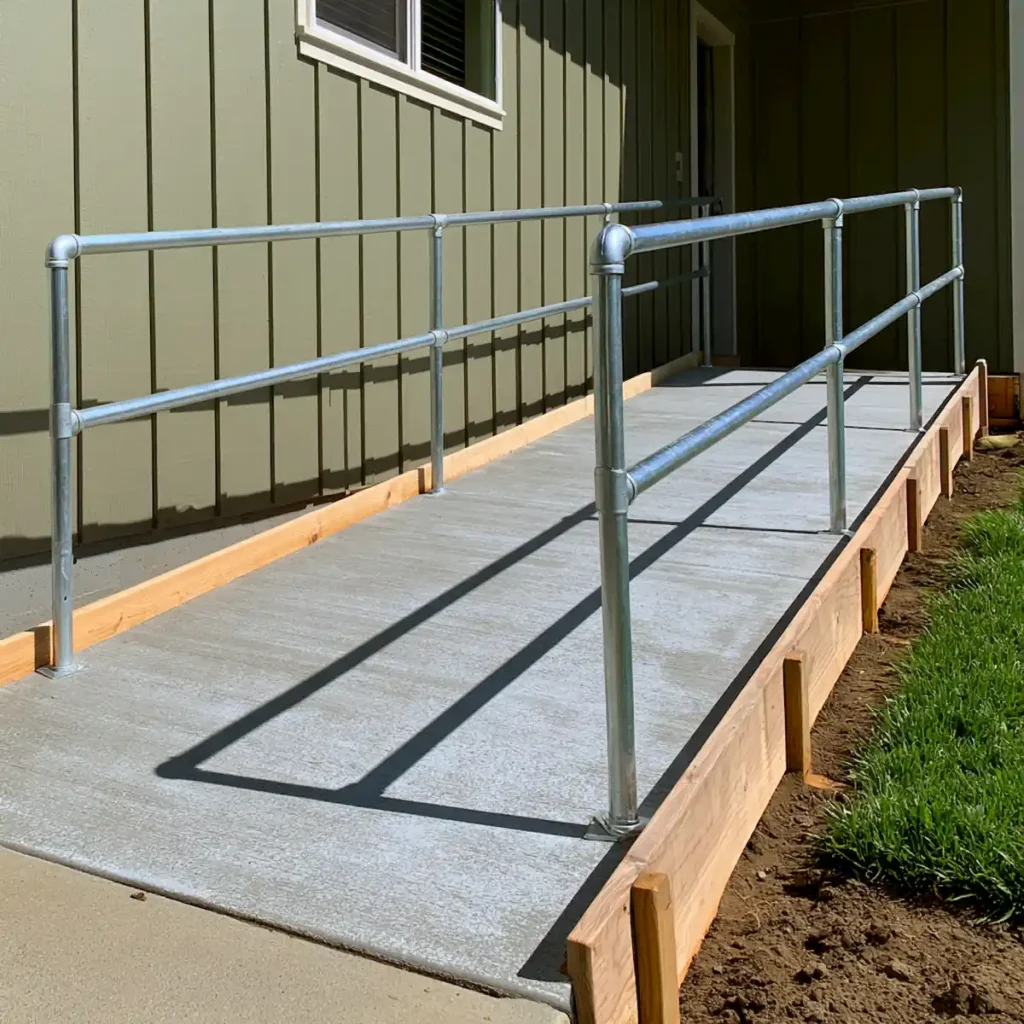
- Ramps and railings at entrances
- An accessible bathroom: a roll-in shower, grab bars, a raised toilet
- Wider doorways for a wheelchair or walker
- A stair lift, or moving bedroom and bathroom access to the first floor
- Vehicle changes, such as a wheelchair lift or hand controls
Each item must be tied to the injury and the medical restrictions it caused.
Why These Items Get Left Out
Home changes often get left out of an accepted claim. The insurer may pay for surgery and rehab, then its doctor releases the worker with no restrictions and no plan for life at home. No one writes an order for a ramp, so no one pays for one. The risk is highest at settlement. If future medical care is closed, needs that show up later usually fall to the worker and the family.
How Home Modifications Are Proven
- A doctor’s written opinion. The doctor should state what change is needed and why the injury requires it.
- A home assessment. An occupational therapist can document barriers in your home and how to fix them.
- A life care plan. For the most serious injuries, a workers’ comp life care plan can list modifications, future care, and costs.
- Estimates. Written contractor estimates turn a recommendation into a number.
If the insurer’s doctor is the only opinion in your file, consider a second opinion before you settle. For head injuries, see what workers’ comp can do after a brain injury from a fall at work.
What to Do Now
- Tell your doctor what you cannot do at home. Stairs, bathing, getting in and out of a car. Ask that those limits go in the chart.
- Ask for the change in writing. Send the request to the insurer with the doctor’s support and keep a copy.
- Keep every receipt. If your family has already paid for a ramp or grab bars, save the invoices and photos.
- Do not wait for settlement talks. Needs are easier to prove while you are still treating.
If the insurer refuses, you can take the dispute to an administrative law judge at the Missouri Division of Workers’ Compensation, where medical testimony often decides the question.

Before You Settle
Ask whether the offer accounts for the changes your home and vehicle will need. Read about future medical care in Missouri workers’ comp before you sign anything that closes it.
How We Answer the Insurer’s Doctors
Insurance company doctors rarely write that a worker needs surgery, future care, or cannot return to work. We respond with orthopedic surgeons, neurosurgeons, pain management physicians, and vocational consultants who don’t work for the insurer. In 2025 alone, this firm spent over $700,000 on expert witnesses.
We also prepare their opinions to withstand testing. Our office has handled roughly 1 in 4 of recent workers’ compensation trials at the St. Louis Division of Workers’ Compensation, where the insurer’s doctors are cross-examined under oath. Insurers know which firms will actually try a case, and it changes what they offer. Every case is different; results depend on the facts.

Consider Contacting Us Today
Free Consultation: (314) 361-4300. Talk Directly With Attorney James M. Hoffmann.
A ramp, a bathroom, a lift for the van: these needs are easy to leave out and hard to add later. Attorney James M. Hoffmann has represented injured Missouri workers for 30+ years, recovering more than $100,000,000 for clients. When you call, you talk with the attorney handling your case, not a call center.
Call (314) 361-4300 or request a free consultation online. No fee unless we recover compensation.